
A Closer Look at Oak: Species, Sawing Methods & Grain

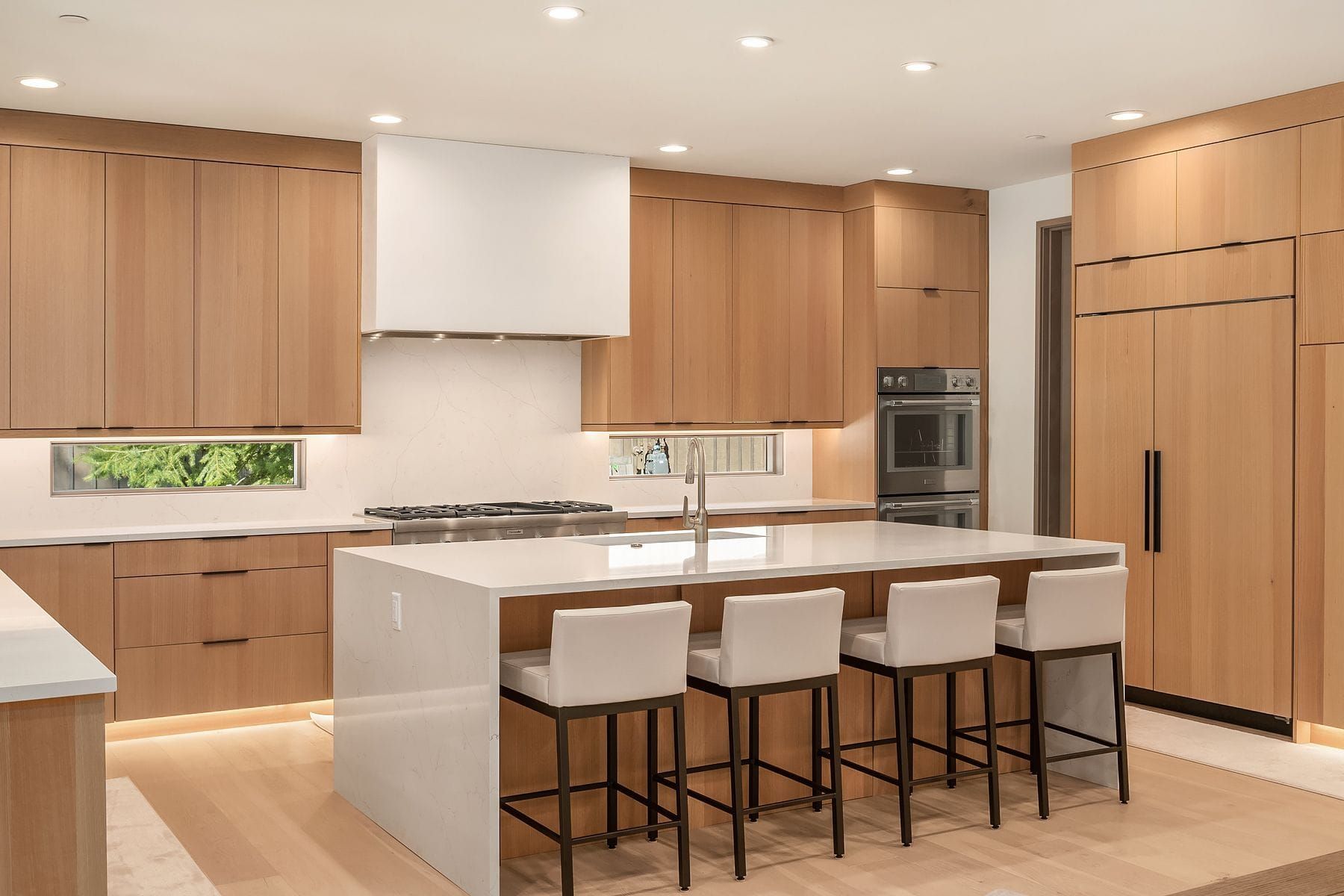
When most people think about oak cabinetry, they tend to think first about Red Oak versus White Oak. But species is only part of what determines how oak will look. Where the tree was grown and, especially, how the log was cut can dramatically change the grain, color and overall appearance of the finished wood.
If you’ve ever looked at two oak cabinet doors and wondered how they could possibly be the same species, this is probably why. Before comparing plain sawn, rift sawn and quarter sawn, it helps to understand that Red Oak and White Oak themselves are actually quite different woods.
Red Oak vs. White Oak
Red Oak and White Oak are both North American hardwoods that have been used for generations in cabinetry, furniture and flooring. Because they both have “oak” in their names, it’s easy to think of them as variations of essentially the same wood, but they actually come from different species of trees and have some surprisingly different properties.
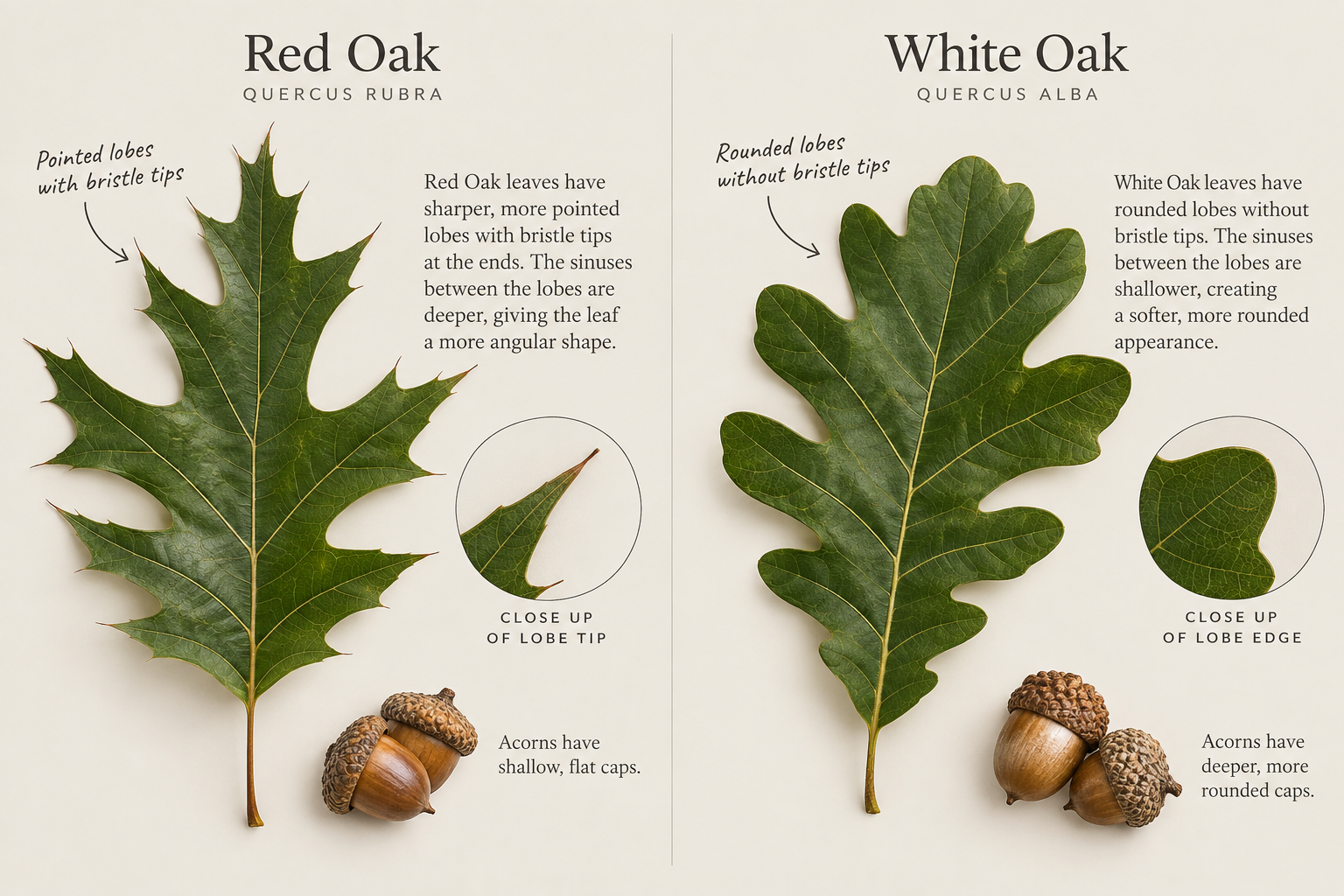
One of my favorite differences between the two is something you would never know from looking at a cabinet door. White Oak contains structures called tyloses, which plug many of the wood’s vessels and make it much more resistant to water passing through them. That property is one of the reasons White Oak has historically been used for things like boats and barrels for aging wine and spirits. Red Oak has a much more open pore structure. In fact, with the right piece of Red Oak, you can blow into the end grain and actually push air through the pores of the wood. Same “oak” in the name, but a pretty significant difference in how the two woods are structured.
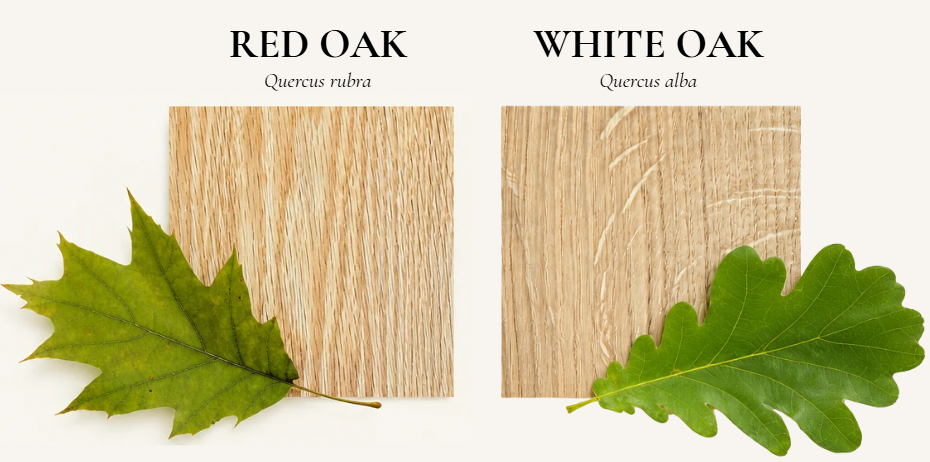
Their appearance is different too, although the names Red and White can be a little misleading. You can’t necessarily identify them by looking for red or white wood. Red Oak usually has warmer tones, ranging from pale tan and light straw to golden and reddish-brown. White Oak tends to range from tan to medium brown and can sometimes have gray or olive tones. Both have plenty of natural variation, and whatever stain or finish is applied will obviously affect the final color as well.
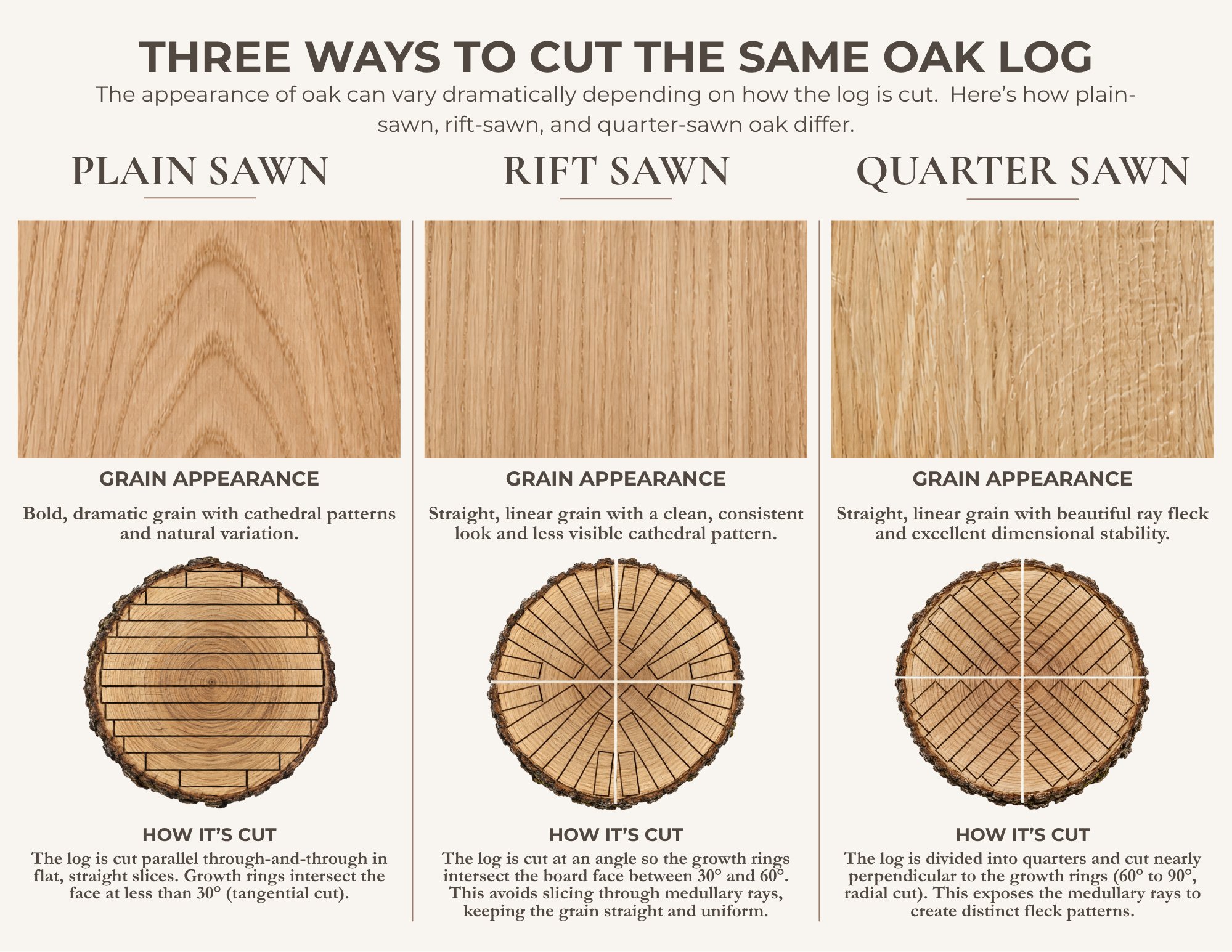
The grain pattern is where things can get confusing. People often associate Red Oak with the large cathedral patterns common in traditional oak cabinetry, while the straight, linear grain popular today is often associated with White Oak. But that difference isn’t simply Red Oak versus White Oak. A lot of what you’re seeing has to do with how the log was cut. The large cathedral grain most people picture when they hear Red Oak usually comes from plain-sawn Red Oak, while much of the White Oak we see in cabinetry today is rift or quarter sawn. Change the cut, and the same species can have a very different appearance.
Plain Sawn, Rift Sawn and Quarter Sawn
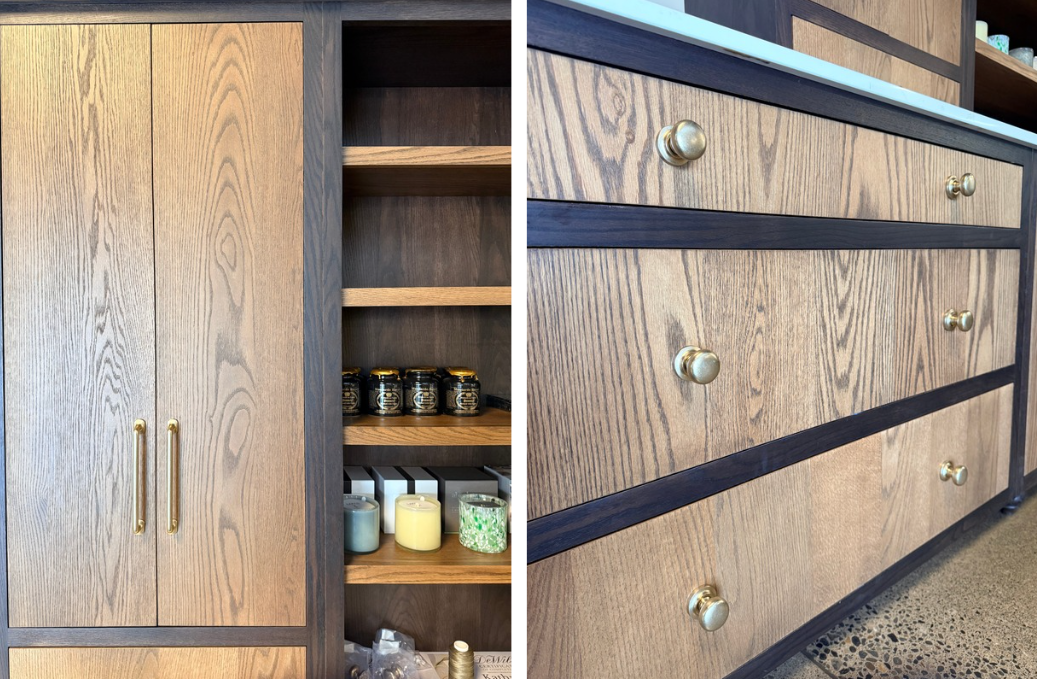
Plain sawn, also called flat sawn, is the most common way to cut lumber and uses the log efficiently. Because of how the growth rings meet the board’s surface, plain-sawn oak shows a lot of movement in the grain. You’ll often see both straight areas and large arches or “cathedrals” that are easy to spot in oak. One board might have a big cathedral pattern, while the next board looks totally different. This variation is normal for plain-sawn lumber and isn’t a flaw in the wood.
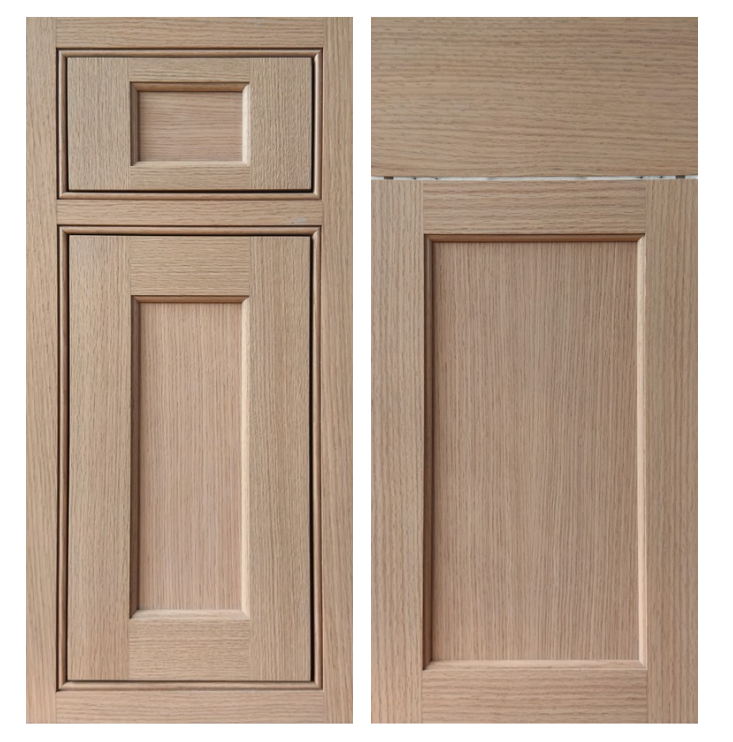
Rift-sawn lumber is cut at a different angle to the growth rings, which gives the board a much straighter and more even grain. Instead of the big arches and cathedrals you see in plain-sawn oak, rift-sawn boards have fine lines that usually run in the same direction. It’s important to know that rift-sawn doesn’t mean White Oak. Rift-sawn just describes the way the log was cut, not the type of tree. Both White Oak and Red Oak can be rift-sawn, and rift-sawing Red Oak makes it look very different from the plain-sawn Red Oak that most people know.

Quarter-sawn lumber can also have a straight grain, which makes it easy to mix up with rift-sawn until you know what to look for. Oak has natural features called medullary rays that run from the center of the tree outward, and quarter-sawing brings these rays out on the board’s surface. They appear as flakes, ribbons, or unique markings that cross the grain. I affectionately call these flecks “stretch marks,” and once you see them that way, they’re easy to spot. Some boards have a lot of these marks, while others have less, but this variation is normal and is one reason people choose Quarter-Sawn White Oak. Rift sawing hides most of these rays, so even though both rift-sawn and quarter-sawn oak can have straight grain, the amount of visible flecking helps you tell them apart.
There are also practical differences between these cutting methods. Plain sawing is efficient and turns more of the log into usable lumber, which makes it the most common and usually the most affordable option. Rift and quarter sawing are more selective and produce less usable wood, so they tend to cost more. The way the growth rings are arranged also affects how the wood handles changes in moisture, with quarter-sawn and rift-sawn lumber usually being more stable than plain-sawn. For most homeowners choosing cabinets, though, the biggest difference is the grain: plain-sawn has more cathedrals and variation, rift-sawn has straighter grain, and quarter-sawn has straight grain with the unique ray fleck or “stretch marks.”
A Different Look at Red Oak
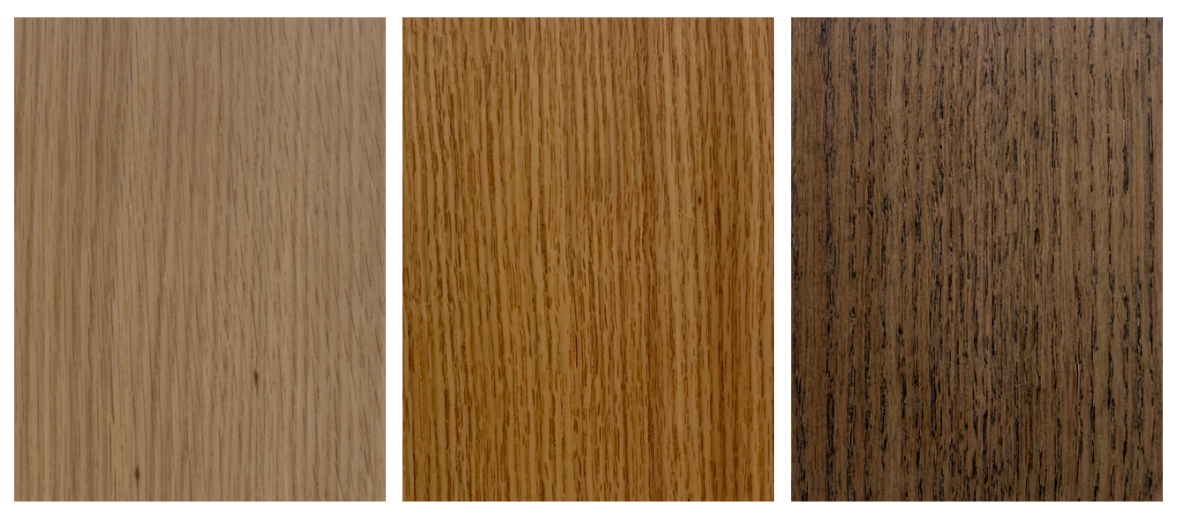
Just as the way a log is cut can change the appearance of the wood, growing region can make a difference too. Red Oak grown in northern glacial regions develops under colder conditions and a shorter growing season, resulting in slower growth and tighter, more consistent growth rings. It also tends to be lighter and less pink or red than the Red Oak many people are familiar with, with coloring that can be closer to what you might expect from White Oak.
When this northern-grown Red Oak is rift sawn, the result can be surprisingly different from traditional Red Oak cabinetry. The large cathedral patterns associated with plain-sawn Red Oak are replaced by a tighter, straighter grain with a fine linear appearance and very little ray flecking. Combine that with the lighter natural color of the wood, and you have a Red Oak that may not immediately look like Red Oak to someone who is used to seeing the more traditional version.
This is the type of Red Oak we selected for the new Rift-Sawn Red Oak offering at DeWils. We source it from the northern glacial region specifically for those tighter growth rings, lighter natural color and more consistent grain. It gives designers another option for achieving the light, linear look that has become so popular in natural wood cabinetry while still having the characteristics of Red Oak.
When comparing oak for a project, though, the name on the sample only tells you so much. A plain-sawn Red Oak, Rift-Sawn Red Oak and Quarter-Sawn White Oak can look dramatically different even before a finish is applied. Rather than choosing based on the species name alone, look at the grain and how much movement you want to see across an entire space. Plain-sawn material will generally show more arches and cathedral grain, rift-sawn material will have a quieter, more linear appearance, and quarter-sawn oak will show more of the distinctive ray fleck that I already mentioned; I affectionately call its “stretch marks.”
Looking at a larger sample is helpful too. A small finish chip or even a single door can only show a small portion of the variation that will eventually appear throughout an entire kitchen. Wood is a natural material, so color, grain and growth characteristics will always vary from board to board. Understanding the species, where it was grown and how it was cut gives you a much better idea of what to expect once you see it on a larger scale.
In Conclusion
The biggest takeaway is that “oak” only tells you so much. Red Oak and White Oak are different species with different physical characteristics, but even within the same species, growing region and the way the log is cut can completely change what you see on the finished cabinet. Plain sawn gives us the cathedral grain most people traditionally associate with oak, rift sawn produces a much straighter, more linear grain, and quarter sawing exposes the ray fleck that gives the wood those distinctive “stretch marks.”
When you’re choosing wood for cabinetry, look beyond the name printed on the sample. Look at larger samples when you can, pay attention to the grain and natural variation, and think about how that movement will look across an entire room rather than on a single door. There isn’t one version of oak that is better than another; understanding what creates the differences simply makes it easier to choose the look you want and know what to expect when the finished cabinetry is installed.